Congrats 🥳
Your Guide is Ready!
👇 Read it now — get clear steps to practice safely & effectively.
💌 The guide is also in your email — check Inbox or Promotions/Spam to make sure it arrived.
🎁 I’ll soon send you another helpful gift to your email — don’t forget to open my message.

WHY YOU CAN TRUST ME WITH YOUR BEAUTY
Hi! My name is Alina Ostrovskaya, I’m 36.
I’ve been practicing face yoga for eight years and teaching it for more than six — through private sessions, group classes, and my YouTube channel, where my lessons have been viewed over 5,000,000 times.
I’ve worked with women of all ages — from their 20s to 70+ — and I’ve seen real, visible progress in every case.
My journey began at 28, when I noticed early wrinkles, puffiness, and a tired skin tone. Honestly? I was scared. I was so young, yet my face was already changing.
I knew injections and surgery weren’t for me — too expensive, too invasive, and too frightening.
So I started looking for a natural way to feel better in my skin.
I found face-yoga videos on Instagram and loved the idea of working with the root cause — muscle imbalance.
I practiced daily, took a structured course, and within a month saw real improvements: fresher skin, lifted features, less puffiness.
The biggest breakthrough was realizing I could support my face myself — without doctors or costly procedures.
Soon my friends asked me to teach them, and that’s when I decided to become an instructor.
I completed a full year of professional training at the International Face Yoga Academy, learning from medical experts: cosmetologists, neurologists, and rehabilitation specialists, with a strong scientific and anatomical approach.
Since then, I’ve been helping women restore their natural beauty and feel more confident and happier — and I truly love this work.
In this short guide, I’ve gathered the 7 key steps from eight years of experience, so you can practice face yoga safely and effectively. Enjoy reading!

CONSISTENCY IS
THE KEY TO RESULTS
Take a quick test: who do you think will see results faster?
A) Emily practices twice a week for one hour
B) Maria practices five times a week for 10–15 minutes
C) Jolene practices twice a day for 20 minutes
Here’s the truth: facial muscles, just like body muscles, respond best to moderate but regular training.
The American College of Sports Medicine notes that short, consistent workouts with rest days are more effective than occasional “marathons” or excessive overload. That’s why the right answer is Maria.
When I was training to become a face-yoga instructor, I was extremely dedicated — and I started practicing every day for an hour.
To my surprise, after just a week of such intense training, my face began to look worse: tired, flat, and lifeless. I also overworked my masseter muscle, and my jaw started opening with difficulty.
When I told my teachers, they immediately said I needed to reduce the intensity — the strategy I chose was simply wrong. And because of that mistake, I had to recover for an entire month.
And on the opposite side — both my experience and the experience of hundreds of my students show that when you practice too rarely, once a week or once every couple of weeks, the effect is there, but it’s very weak and very short-lived.
✨ Golden rule: 10–15 minutes, 4–5 times a week. This way you’ll see results faster without unnecessary strain.
💡 Tip: link your face yoga practice to an existing routine — like your morning skincare or evening cleansing. This makes it a natural part of your day, so you won’t skip it.

PROPER TECHNIQUE
Many women have come to my private sessions saying:
“I’ve been practicing from YouTube for 3 months, but nothing is changing.”
The moment they showed me their exercises, the problem was obvious: poor technique. Most didn’t know which muscle to activate, whether to tense or relax it, or how much effort to use.
As a result, the best-case scenario was no progress, and the worst was creating new issues.
And this makes sense. Research on muscle training (Journal of Strength and Conditioning Research, 2012) shows that quality of movement matters more than quantity. Doing lots of reps incorrectly will bring little to no results.
Tips:
✨ Learn from those who understand anatomy and physiology — a certified trainer gives you a safe foundation.
✨ Study each exercise carefully: know which muscle you're working with and how.
✨ Practice with a mirror — it’s the best way to spot mistakes.
SAFETY: FIRST,
DO NO HARM
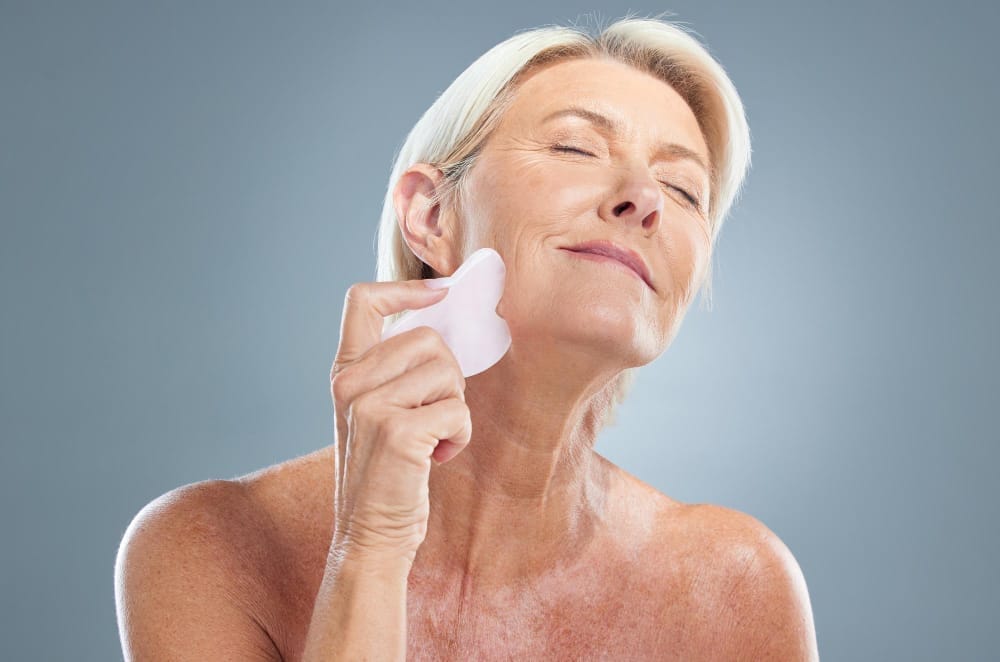
Beginners often try to “push harder”: forcing movements, pulling the skin, or practicing even when they feel unwell.
I used to make this mistake very often in the beginning myself. But this kind of effort can actually be harmful.
What can go wrong:
❌ Overloading muscles leads to spasms and even new wrinkles.
❌ Excessive stretching weakens the skin.
❌ Training while sick can make the condition worse.
In sports physiology, pain is considered a signal of overload, not effectiveness (American College of Sports Medicine, 2018). And studies show that excessive pressure damages collagen and elastin, accelerating skin aging (Dermatologic Therapy, 2020).
Safety rules:
✅ Never do exercises “through pain.”
✅ Don’t pull the skin — only apply gentle pressure.
✅ Skip practice if you’re unwell or have inflammation.
Face yoga should always feel light and pleasant. If you feel pain — stop.
A HOLISTIC APPROACH:
FACE, BODY & POSTURE
Many people come to face yoga with a specific request: reduce a double chin, smooth forehead lines, or soften nasolabial folds.
The mistake is looking for a “magic exercise” for just one area.
In reality, the face is part of the whole body — and everything is connected.
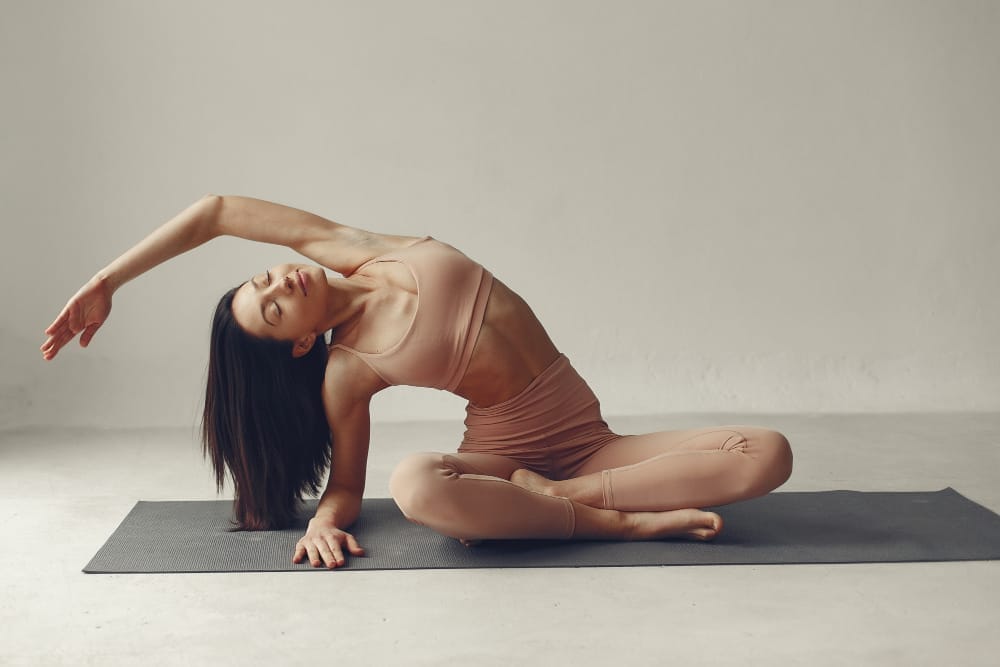
A simple example: if you spend long hours at a computer or on your phone, your neck muscles tighten and shorten. As a result, the jawline starts to sag and a double chin forms. If you only train the chin but ignore your neck and posture, progress will be minimal.
Fact: Research in rehabilitation shows that improving posture enhances facial muscle tone and reduces visible signs of aging (Journal of Physical Therapy Science, 2016).
⭐ Takeaway: For real results, train holistically.
Practice exercises for the entire face, pay attention to your neck and back, and maintain good posture.
10 min for your body and 10 for your face will give you far better results than 20 min on the face alone.
THE FACE IS A MIRROR
OF THE SOUL
We often think facial issues are purely physical: weaker muscles, less collagen.
But emotions play a huge role too.
Chronic stress keeps facial muscles tense: brows furrow, the jaw clenches, lips tighten — and over time these habits “freeze” into wrinkles and folds.
Research shows: excess cortisol breaks down collagen and elastin, speeding up skin aging (Journal of Dermatological Science, 2014). It also causes fluid retention, leading to puffiness (Frontiers in Endocrinology, 2017).
Takeaway: Inner calm affects your look as much as your mood. Relaxed mind = relaxed face.
What helps:
⭐ Use quick stress-relief tools like breathing techniques or meditation.
⭐ Smile — even a small one triggers endorphins and eases tension.
⭐ If anxiety or fatigue linger, don’t delay seeing a specialist. Emotional balance often becomes the key to outer beauty.

SLEEP, WATER & NUTRITION — THE THREE PILLARS OF A YOUTHFUL FACE
Even the best exercises won’t work if you don’t sleep well, drink enough water, or eat right.
📘 What science says:
• Lack of sleep raises cortisol and speeds up collagen breakdown → wrinkles and puffiness (American Academy of Sleep Medicine, 2013).
• Dehydration lowers skin elasticity and makes it dull (Clinical, Cosmetic and Investigational Dermatology, 2015).
• Excess sugar destroys collagen through glycation and accelerates aging (Journal of the American College of Nutrition, 2014).
My tips:
✔️ Sleep: Aim for ~8 hours. I set a reminder at 11 pm to head to bed and an alarm at 8 am — this keeps my rhythm steady.
✔️ Water: Drink at least 1.5 L daily (tea/coffee don’t count). I keep a 0.75 L bottle on my desk: one before lunch, one after — easy way to track my minimum.
✔️ Sugar: Limit sweets. Personally, I allow myself something sweet just once a day, usually with morning coffee and only after a full meal with veggies. This way I enjoy it without overdoing it.

SET GOALS & TRACK PROGRESS
Most people quit face yoga after a few weeks. The reason? No clear goal and no visible progress.
🎯 Set your goals.
Ask yourself: What do I want? Maybe reduce smile lines, define the jawline, or simply feel more confident. When you know your “why,” it’s easier to stay on track.
📸 Track results.
Take weekly photos in the same light, write down your sessions, and note how you feel — this helps you see real changes sooner and stay motivated when progress is still subtle.
🎲 Make it a game.
I often set small challenges: “If I practice 10 minutes a day for two weeks, I’ll go to the spa or buy myself a dress.” Rewards make practice fun.
Fact: People who track progress are twice as likely to reach their goals (Harvard Business Review, 2017).
CONCLUSION
Let’s quickly recap:
Consistency — 15 min, 5 times a week beats occasional long sessions.
Technique — work mindfully with your muscles, follow certified trainers.
Safety — no pain, no pulling the skin, respect contraindications.
Holistic approach — train the whole face, neck, posture, and body.
Emotions — stress shows on your face, learn to relax.
Sleep, water & nutrition — your essential foundation.
Tracking — photos, journals, and small goals keep you motivated.
You might now feel like you need to fix everything at once — sleep, diet, practice, journaling.
🌸 My advice: take it step by step, one habit at a time.
For example, focus first on sleep, or on reducing stress, or on simply practicing regularly.
The main thing is moving forward, even with small steps.
You’re already doing amazing! I wish you the very best.
💌 Your guide is in your email too — check Inbox or Promotions/Spam.
🎁 And I’ll send you another helpful gift soon — don’t miss my message.